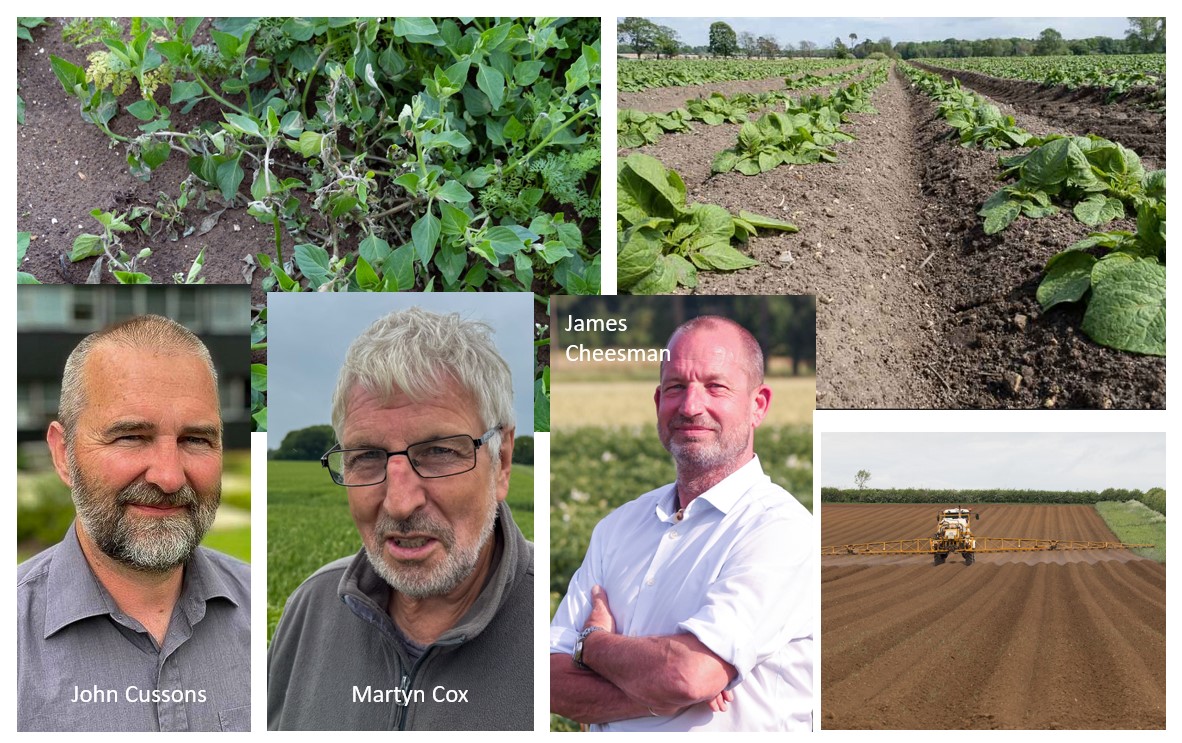
POTATO growers are facing a mounting weed control threat, with emerging species, herbicide resistance and regulatory pressure all combining to test current management strategies.
The potato crop is still a strong rotational too, but only if growers stay ahead of current and future risks, according to John Cussans, weed science specialist at ADAS.
“For example, potatoes have been a very good crop for grassweed control. Spring planting and the cultivations required give you opportunities, but if you have high pressure across the rotation, it will still come through and cause problems,” said John.
Blackgrass remains the obvious example and whilst potatoes can significantly reduce populations, growers with severe infestations will still see heads on ridges at harvest.
“There’s slightly mixed messaging. You can say potatoes are brilliant for blackgrass control, but growers will quite rightly say: ‘I’ve still got blackgrass in my potatoes.’”
The growing presence of invasive and warm season species that are better adapted to spring crops are becoming of more concern. Examples include barnyard grass, Setaria spp., thornapple, amaranthus spp. and mugwort which are all appearing more frequently in different parts of the country, particularly in eastern regions where potatoes are a major crop.
These are weeds that are difficult to control once established. “Once the canopy closes, the crop does a lot of the work, but you must protect it up to that point,” said John
Barnyard grass and setaria spp. are C4 species that thrive in warm conditions and as average temperatures rise, their competitive ability in spring-planted crops could increase.
“Thorn apple has become much more of a challenge in East Anglia. There are crops heavily affected now where it wasn’t historically a major concern,” John said, adding that the increased use of cover crops and regenerative systems is a potential pathway for introduction, at least for some species.
“Biosecurity in the rotation is critical. If you’re using cover crops, buy from reputable sources and monitor what’s coming in. If you see these weeds in cover crops, that’s your early warning. By the time they’re in the potato crop, you’re already on the back foot,” he said.
Alongside new species sits a growing resistance concern, particularly around ALS herbicides. In potatoes, rimsulfuron remains the key post-emergence option for grass- and some broad-leaved weeds. But it belongs to the sulfonylurea group, and resistance is well documented in other crops.
“If you’re using ALS chemistry, you need to know whether your target weeds are still susceptible. According to pesticide use survey data, around 10-15% of growers use them in potatoes, so resistance testing is important.”
Confirmed ALS resistant weeds in the UK include chickweed, mayweed and poppies. There is increasing concern about some populations of groundsel, fat hen and annual meadow grass. All of these weeds can build up large populations.
ALS resistance in Poa annua exists globally and is likely present in the UK. In Ireland, testing by advisory group Teagasc has shown relatively high levels of resistance in some populations.
Another current and topical issue is the potential loss of key actives such as metribuzin and flufenacet, which would further narrow options for potato growers. The UK-EU sanitary and phytosanitary (SPS) deal currently in negotiations will see a UK realignment with the European Union rules on plant protection products (PPPs) from 2027.
Metribuzin has already been withdrawn in the 27-member bloc, with flufenacet in its grace period that runs until the end of this year.
“Losing these actives, alongside the potential for continued development of ALS resistance in weeds, makes the medium-term outlook challenging,” John said.
Independent potato specialist Martyn Cox agrees the weed pressure on the crop is building and believes the answer lies in looking beyond individual crops, fields and herbicide products.
“There is crop protection and there is agronomy. Agronomy is the science of growing plants and crop protection is part of that, but soil structure, drainage, variety choice and canopy size are all crucial, too.”
He argues that weed control in potatoes must be considered across the whole rotation, with the problematic weeds often the ones you don’t have easy control of at other points in the rotation.
“People say field pansy or knotgrass don’t affect yield in cereals so they’re not worth managing, but we know they can be an absolute nightmare in onions or root crops.”
Allowing blackgrass or Italian ryegrass to seed in potatoes also has consequences well beyond the current crop and for Martyn – who advises across East Anglia – these remain central concerns, particularly as resistance intensifies.
He points out that they are ‘high up the resistance ladder’, with most populations resistant to ALS chemistry and Italian ryegrass has developed resistance to glyphosate in some parts of the country.
“As the crop dies back, grassweeds can grow like mad if you let them establish and they seed all over the place. Letting potatoes get full of weeds can have serious consequences for following crops and doesn’t help with landlord relationships on rented land.”
As outlined by John, cover crops and wild bird mixes are adding further complexity and Martyn’s own experience flags millet, buckwheat and chicory as other species to appear in potato crops, along with Setaria spp. He adds that some legumes in mixes are surprisingly tolerant to glyphosate and cereals, where included in mixes and allowed to set seed, can increase pressure on the following potato crop.
“Holistic is the word. When you change a system like we are doing at present, you’ve got to ask what the consequences are. If you don’t mitigate the effects of change, don’t be surprised when they bite you.”
Martyn notes that another growing headache is Hairy Nightshade (Solanum sarrachoides), with the weed being seen with increasing frequency on potato-growing land.
“It will come through potatoes quite happily. You don’t want it in the field or even around the edge as it can host blight, and potentially viruses that can affect potatoes.
“We don’t know the PCN (potato cyst nematode) susceptibility of hairy nightshade, but closely-related black nightshade has been considered a trap crop.
“Groundsel has also become more problematic following some mild winters, with multiple generations possible in a single season and some populations with suspected ALS resistance issues,” said Martyn.
Both advisers agree that a healthy, vigorous crop is the best herbicide, so planting into the right conditions and getting crops to full canopy cover as quickly as possible will help suppress weeds.
Martyn adds that variety is also a factor, with some producing smaller canopies that can struggle to outcompete weeds perhaps not suitable to situations with a high burden.
Herbicides remain a key component of integrated weed control strategy and Certis Belchim’s Technical Manager James Cheesman is urging growers not to lose sight of the fundamentals when it comes to chemical weed control. He believes residual herbicides remain the backbone of any robust programme, getting on top of weeds early and avoid firefighting later on.
“Options like Praxim (metobromuron) continue to play a vital role in delivering broad-spectrum control and managing early flushes. It will arguably become more important as we lose other key actives,” said James.
However, he believes the crop protection industry also needs to take a fresh look at chemistry that is already available.
“As weed pressures evolve, there is an opportunity to revisit existing herbicides and properly assess how effective they are against some of these emerging threats. Sometimes the answers are already in the toolbox, it’s about understanding how to position them correctly within an integrated programme.”
Certis Belchim is preparing to bring a new post-emergence option to the potato sector, with a label extension for an existing pyridate product expected shortly.
“This is a genuinely different mode of action for potatoes and it’s a contact active that complements residual programmes rather than replacing them. Importantly, it gives growers another chemistry to work with at a time when we are facing increasing regulatory and resistance pressures on key actives.”