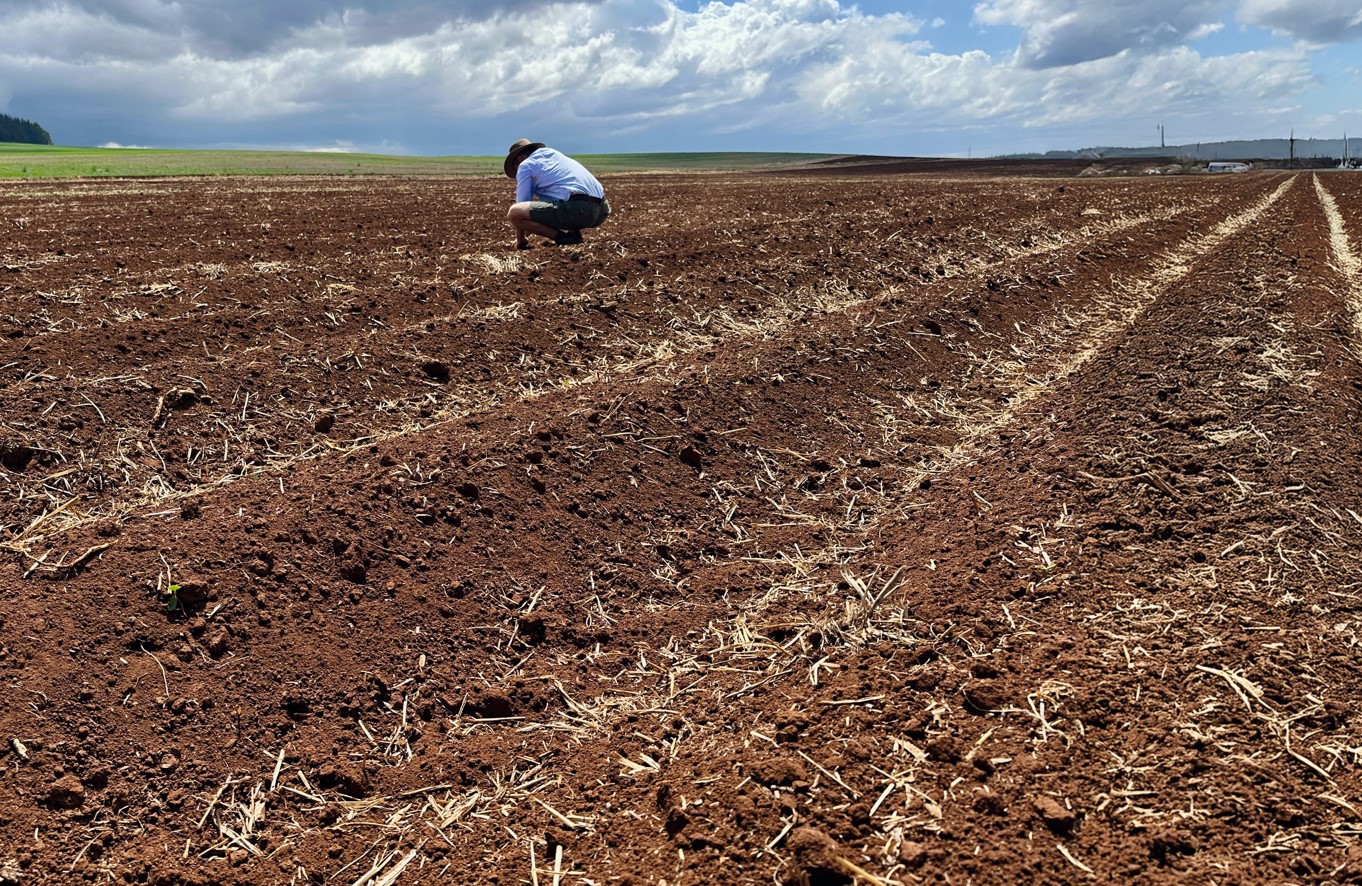
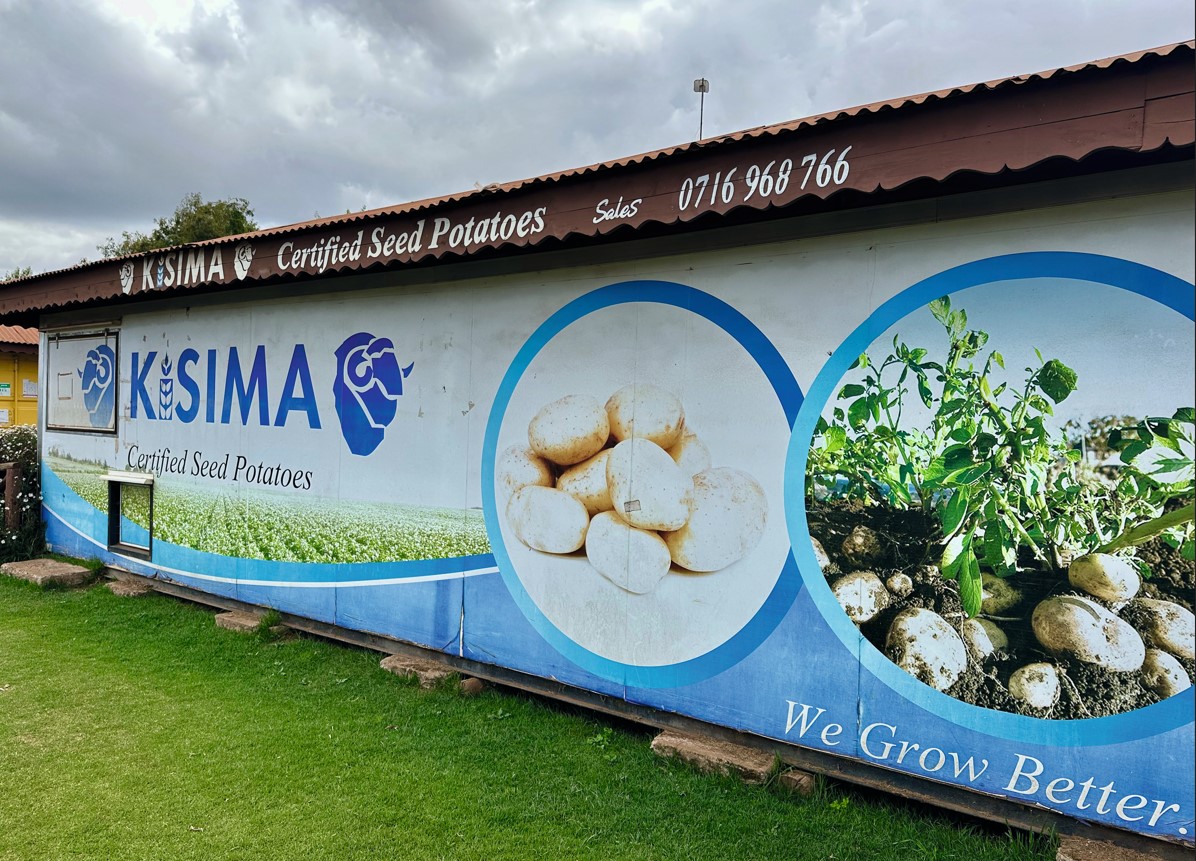
JUST a few miles north of the Equator, overlooking the Lewa Wildlife Conservancy, Kisima Farm in Kenya is one of the very few potato farms in the country that doesn’t have a potato cyst nematode problem.
Potato cyst nematodes were first discovered in Kenya in 2014, with a national survey in 2016 finding the pest was widespread across potato growing areas.
But thanks to operating a strict closed system for the seed potato multiplication operation, meaning only plants produced under sterile conditions are brought onto the farm, Kisima Farm has never had a positive PCN test, making it an ideal operation to multiply up two new PCN-resistant varieties.
Two core reasons explain some of the challenges Kenyan potato growers face with PCN. Prof Danny Coyne, joint leader of NemAfrica, a joint unit between the International Centre of Insect Physiology and Ecology (icipe) and the International Institute of Tropical Agriculture (IITA), said: “Distribution is wide because there’s multiple seasons per year of potatoes – and rotation isn’t widely practiced – which facilitates multiplication.”
The second reason is that around 80% of the potatoes grown are of a single PCN-susceptible variety, Shangi, which fits farmers needs with its very short dormancy, allowing immediate replanting after the previous season’s harvest and early maturity.
“Consumers love it too,” Danny said. “It tastes great and cooks fast.”
But, although it hasn’t been tested, Danny is positive it has some tolerance to PCN. That’s a double-edged sword in that it still yields in the presence of PCN but does not help to diminish populations, leading to some extremely high populations with some fields reaching as high as 160 eggs/g of soil.
“We’ve also discovered the nematode’s biology has changed,” Danny said. “We’re finding huge cysts that are double the size you find in the UK, while it has also lost the need to be dormant that is required for survival in countries with a winter.”
A chance conversation between James Hutton Institute nematologist Prof John Jones, who had helped Danny with initial characterisation of PCN in Kenya, and the Institute’s breeders opened the door to new varieties for Kenya, Danny said.
“They were working on developing PCN-resistant phureja-type potatoes for the UK market, which coincidentally resemble Shangi. One of the downsides to phureja varieties is they typically have low dormancy, so all the ones with low dormancy were being literally thrown in the bin by the breeders. But John recognised the potential fit for Kenya.”
That led to a UK Innovate project in 2019 to assess the potatoes for farmer and consumer acceptance in Kenya. “Long story, short, PCN resistance held up well in the eight lines we tested, and consumers loved their taste in blind tests,” Danny said.
Two of the eight lines were taken forward with the help of the Sustainable Agricultural Foundation’s Seeds2B programme and Kenyan government agencies to be commercialised in Kenya last August.
“We named one Glen, to reflect the Scottish heritage, while the second is Malaika, which means ‘angel’ in Swahili, after the daughter of a farmer who was integral to the project from early field trials,” Danny said.
While varietal registration is a key step, the variety still needed multiplying before it can be sold in any commercial volumes. The team was keen for that to happen as soon as possible, so started asking seed potato growers in Kenya whether they were interested before registration.
“Kisima Farm were the first to step up,” he said. “They were taking a risk as without registration you wouldn’t be able to sell it on the open market.”
The 2800ha farm in the foothills of Mount Kenya grows around 200ha of seed potatoes split across two growing seasons in the year, according to Farm Manager Buzz Robertson.
Kisima takes delivery of around 12,000 apical cuttings each year from a local producer, who maintains the mother stock to ensure the cuttings remain genetically pure and clean, and then through Kisima’s aeroponics unit the first mini tubers are produced.
The aeroponics unit is incredibly simple, Buzz said. “It’s a 1.2m box covered with plastic, with the plantlets planted in the top so the roots are in the plastic box. Within that box you have sprinklers that sprinkle water or fertiliser on the roots. It’s a way of giving very clean first tubers from the plantlet without any contact with soil.”
It doesn’t suit every variety, he notes. “We also have a sterilised cocoa peat system with drip tape. The advantage is that you tend to get bigger tubers in this system compared with aeroponics where the tubers will fall off once they get too big as they are dangling in the bed.”
Once mini tubers are produced, Kisima takes them through five generations in the field before selling the seed tubers to local farmers.
It’s still early days for the PCN-resistant varieties, with the multiplication having reached the pre-basic generation. “It will be the end of next year before we have commercial quantities.”
But he’s hopeful the varieties will prove to be successful. “I hadn’t realised, but the more you plant them, the more you get on top of PCN – consistently suppressing populations year on year. That could be really big, and as long as the processors and markets like them as a table variety, they should go well,” he said.
With a closed system for introducing new varieties, the biggest threat to introducing PCN onto the farm probably comes from staff, according to David Jones, the farm’s agronomist up until December 2025.
“Everyone grows potatoes on their own little plot of land or farm, so it’s potentially easy for the casual staff to bring it onto the farm on their boots. We’re having to think carefully about biosecurity and educating everyone to put their feet through a dip first, wash their hands, wear clean overalls.”
[Panel] Millipedes are greatest pest challenge
COMPANION cropping is the latest tactic Kisima Farm is using to minimise the damage from millipedes in its seed potato crops.
“We have terrible problems with millipedes,” said David. “They either nip the stems off from the mother tuber or damage the daughter tubers.”
Chemical control with products is not proving particularly effective, and with the farm keen to reduce its reliance on pesticides as part of the regenerative farming approach it employs across the farm, David suggested using a companion crop of peas and buckwheat in an attempt to “distract’ the millipedes.
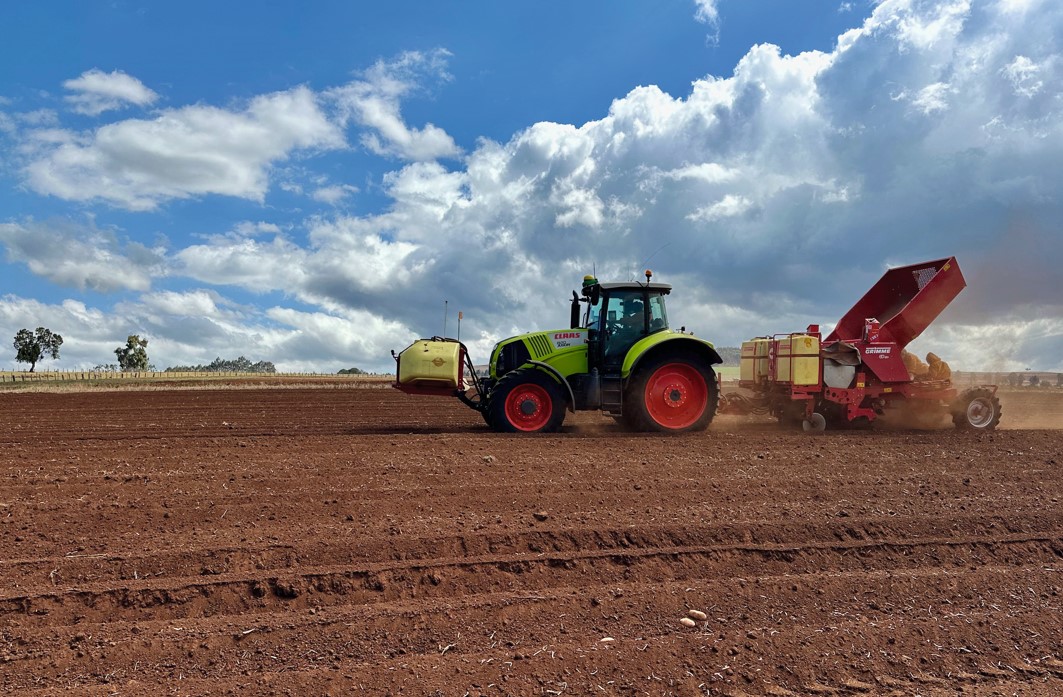
The companion crop is drilled with a Seed Hawk tine drill prior to planting the potato crop, he said, with the aim of providing an alternative food source to the potato shoots, or at least to reduce the pressure.
That seems to have worked, said Buzz, with tubers lifted in early February looking good despite high pressure from millipedes.
Peas and buckwheat were chosen for the first trial companion crop, as they are reasonably tolerant to potato pre-emergence herbicides and not particularly competitive. “We can chop them off with a haulm topper and they don’t interfere too much,” David said.
But an alternative could be lupins and maize, with observations suggesting millipedes are particularly attracted to lupins.