
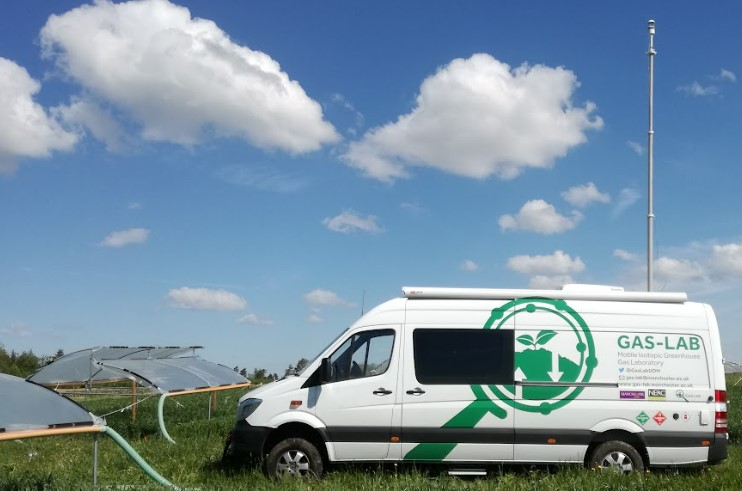
A NEW mobile research platform designed to track how carbon moves through UK farmland will support more sustainable, climate-smart agriculture.
This is thanks to new investment from UKRI Biotechnology and Biological Sciences Research Council (BBSRC).
The carbon tracking platform is one of 31 projects awarded funding through BBSRC’s latest £27 million round of ALERT, a scheme that gives UK bioscience access to world-class tools for world-class science.
Developed by researchers at Lancaster University’s Lancaster Environment Centre, the platform will combine automated CO₂ flux chambers with real-time isotopic gas analysers to measure how much carbon is taken in or released by crops, soils, and grasslands.
The platform will be housed in the newly-formed Centre for Sustainable Soils at Lancaster University.
It will be deployed across the UK’s diverse agricultural systems to track how different land management practices affect carbon storage, soil health, and greenhouse gas emissions – critical information as the UK works towards its net zero goals.
Professor David Johnson of Lancaster University, who is leading the project, said:
“Soil is one of our most important carbon sinks, but understanding how farming affects its ability to store carbon has been incredibly difficult.
“This platform will give us the data we need to make UK agriculture more climate-resilient and environmentally sustainable.”
The platform is designed to be modular and mobile, so it can be used in real-world conditions across the country, from arable farms and grasslands to agroforestry systems. It will provide vital insights not just for researchers, but also for policymakers, farmers and industry working to meet food production and climate targets side by side.
It will also support the UK’s research base in plant science, soil biology, and agri-tech, with direct links to multiple projects funded by BBSRC, NERC, and The Wolfson Foundation.
Now in its 10th year, BBSRC’s ALERT scheme has supported more than 300 awards, providing the bioscience community with access to essential equipment that drives innovation. Previous ALERT-funded technologies have enabled major breakthroughs, including tracking COVID-19 variants, developing a smell-based Parkinson’s diagnostic, and supporting vaccine development through organ-on-a-chip research.
Dr Amanda Collis, Executive Director for Research Strategy and Programmes at BBSRC, said:
“This investment strengthens the UK’s bioscience capability by investing in advanced research equipment, enabling transformative science and fostering collaboration.
“In doing this, we are supporting world-class infrastructure that drives discovery and innovation essential to deliver real-world impacts and transform lives.”
The latest round of awards aligns with the ambitions outlined in BBSRC’s Forward Look for UK Bioscience, supporting curiosity-driven research and strategic priorities including sustainable agriculture, net zero, and global food security.