
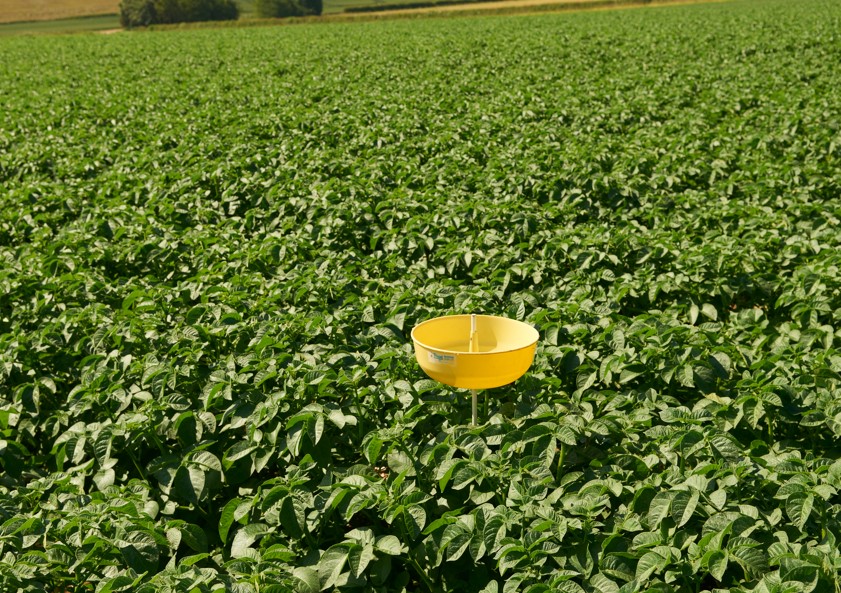
A MAJOR aphid monitoring effort is underway across Scotland to support Scotland’s seed potato sector during the 2026/27 growing season.
As aphid populations continue to pose a major threat to potato health and yields, a collaboration between research organisation Fera Science Ltd and family-owned potato supplier Albert Bartlett is delivering critical data, improved decision-making tools, and enhanced protection for growers across Scotland.
Aphids, small sap-sucking insects such as greenfly and blackfly, are among the most destructive pests affecting temperate agricultural systems. Beyond weakening plants by ingesting sap, they act as key vectors for potato viruses, including Potato Virus Y (PVY), Potato Leaf roll Virus (PLRV) and Potato Virus A (PVA), which cost the UK potato industry millions of pounds annually. Their rapid reproductive cycle and ability to colonise new plants quickly make them particularly challenging to control.
For the 2026 season, Albert Bartlett has funded 43 monitoring trap sites across Scotland and two in Jersey, supporting Fera’s long-running national programme, which dates back to 2004 and typically processes around 850 samples from 100 UK sites annually.
Across the 48 Scottish sites in 2025, 443 samples were processed, with an average of 9.4 samples per trap, and 35 growers participated in running traps across key seed-growing regions.
Regional sample totals included: North Scotland 147, Grampian 98, Angus & Perthshire 133 and the Borders 56.
All growers were supplied with specialist monitoring kits, equipped to collect aphid samples throughout the season. Fera managed kit distribution, grower onboarding, grid reference verification, data permissions, and all laboratory identification work.
Fera provides growers and agronomists with twice-daily website updates, immediate individual sample results, and automatic text/email alerts, including first regional capture of Myzus persicae (peach–potato aphid), alerts when regional virus-risk thresholds are reached and weekly regional summaries throughout the season.
These tools help growers decide whether and when to apply insecticides, which insecticide to use based on species-specific virus-vectoring risk and resistance considerations, and when to desiccate haulms to reduce late-season virus spread.
It also enables them to make an informed decision on whether home-saved seed remains viable and safe to use, as well as supporting resistance management and encouraging integrated pest management (IPM) by helping growers minimise unnecessary treatments while protecting quality.
Analysis from the 2025 Scottish monitoring programme shows significantly-elevated virus pressure. Key findings include:
In North Scotland there were two major peaks, with Myzus persicae (peach potato aphid), Macrosiphum euphorbiae (potato aphid), driving high pressure early and mid-season.
There was a sustained peak that was six times the all-year average in the Grampian area, with peach–potato aphid and potato aphid the key contributors.
In Angus and Perthshire, there were multiple strong peaks with both colonising and non-colonising species responsible. VP remained above average through much of the season.
A notable early-season detection of Rhopalosiphoninus latysiphon (bulb & potato aphid) was found in the Borders three weeks earlier than usual and contributed to June peaks.
Lisa Blackburn and Larissa Collins, who are leading the programme at Fera, emphasised the value of robust science and collaboration:
In a joint statement, they said: “Aphid pressure in 2025 has been exceptionally high, and the rapid reporting enabled by this monitoring network has been crucial in helping growers act quickly and confidently. Our work with Albert Bartlett ensures Scotland’s seed potato sector is equipped with the science and data it needs to manage virus risk effectively.”