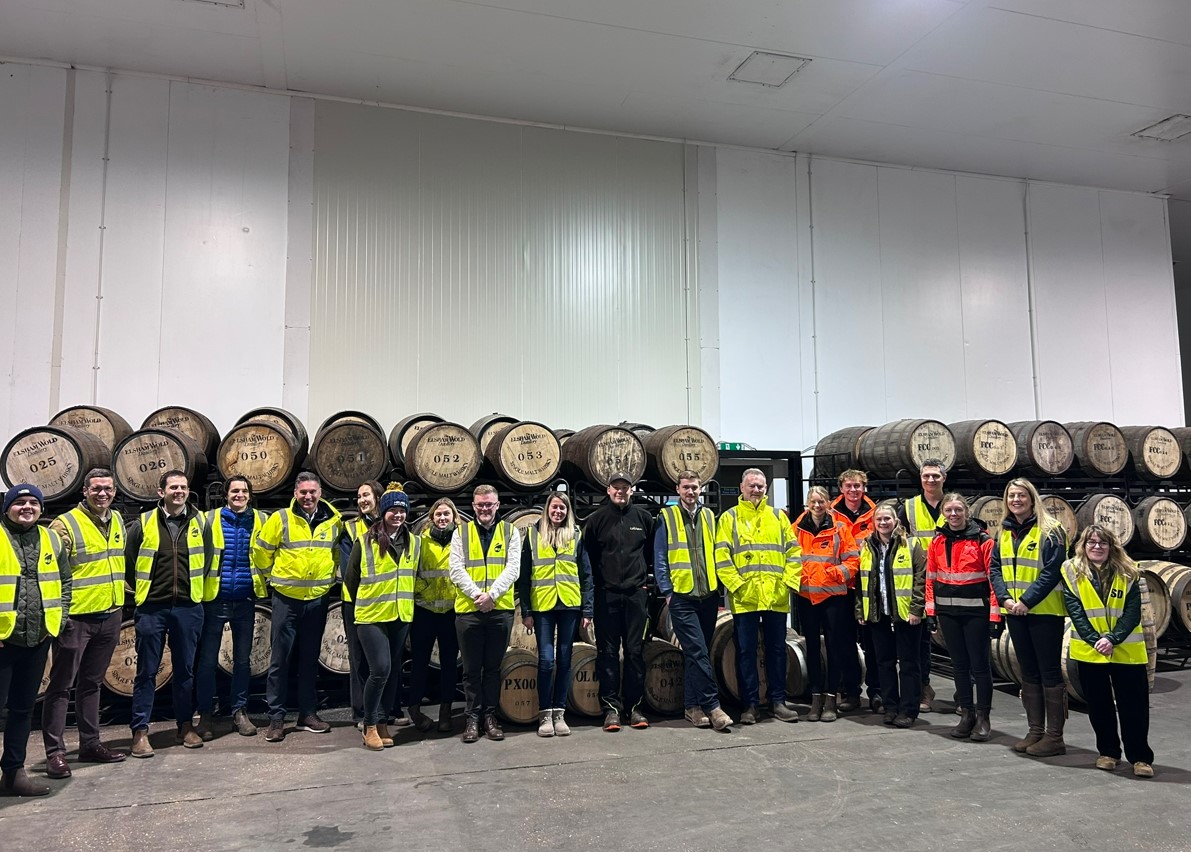
I WAS lucky enough to attend and meet the first cohort of early and mid-career professionals taking part in the new Potato Industry Development Programme last month (February).
Delivered in partnership with the British Potato Trade Association (BPTA), the three-part programme is targeting an identified gap in structured training for people building careers across the potato supply chain. Its purpose is to equip future industry leaders with a whole system understanding at a time when the sector faces mounting commercial, regulatory and environmental pressures.
Fourteen early and mid-career professionals completed the initial phase of training at the beginning of February. They hailed from various different sectors of the potato supply chain, representing production, agronomy, research, policy, manufacturing, trading and procurement.
They took part in an intensive three-day programme of visits and sessions with leading businesses across the sector, giving them a ‘full-circle’ insight into how the whole industry operates and how each of their working sectors contributes to this. They engaged with experts at McCain Foods, Branston, AKP and Haith Manufacturing, gaining insight into how quality systems, processing and fresh market requirements, storage, grading, machinery and trading are connected across the supply chain.
GB Potatoes Chair Alex Godfrey said: “The potato industry is made up of many highly-skilled people working across a wide and complex supply chain. Since the loss of AHDB’s successful Next Generation Programme, what has been missing is a structured way for new entrants to step back and see how those different parts fit together.
“Working with the BPTA, our aim was to create a programme that takes participants from high-grade seed through to the finished product, showing how each part of the chain functions and connects, helping to develop leaders who can meet the future demands of the industry.
“What has really stood out is the calibre of this first cohort. Their appetite to learn and engage highlights the strength of talent coming through the sector, and we are looking forward to supporting them as they move through the next phases and progress in their careers.”
Those participating in the Potato Industry Development Programme included: Abbie Maclean, Production Assistant, Meijer Potato UK; Alexandra Cismas, Production Manager, AKP Ltd; George Cole, Buyer, RS Cockerill; Hannah Sadler, Procurement, Fylde Fresh and Fabulous; Harry Watkins, Fieldsman, Scott & Newman; Holly Turner, Agronomist, Branston Potatoes; Jake Caston, R&D Agronomist, Produce Solutions; James Webster-Rusk, Senior Agribusiness Analyst, The Andersons Centre; Laura Stevens, Plant Pest Risk Manager, Defra; Louise Greenhill, Contracts Manager, Agrico UK; Lucinda Smith, Agronomist; Mark Robson, Managing Director, HK Timbers; Megan Singer, Breeding Programme Trials Officer, Cygnet PB; Tim Allen, Potato Enterprise Manager, Patrick Dean Ltd.
Having been invited to address the cohort on the second night of the programme, speaking in detail about how British Potato magazine, awards and events are organised and pulled together, and inviting comments about its content, I found the enthusiasm and feedback from these people totally infectious.
There was plenty of feedback about how each disseminates information, how much detail each of them looks for and why each attends the British Potato events. All of this has been taken on board and provided valuable insight into how British Potato itself can evolve to meet the needs of future generations.
It was also good to see how each member of the cohort interacted with each other, the partnerships they forged and how inquisitive each was about how other sectors operated. These types of interactions will be crucial in keeping the supply chain operating effectively and ensuring good industry collaboration going forward.
Commenting on the experience, Megan Singer, Breeding Programme Trials Officer at Cygnet PB said: “I came away from the England trip feeling energised and inspired. I loved hearing different perspectives from people involved in all parts of the industry. I got a lot out of the discussions and site visits, especially hearing how others are approaching similar challenges and it opened my eyes to different perspectives. I really look forward to getting together again in June, gaining and sharing more valuable knowledge with new friends.”
During our after-dinner talk, Holly Turner told me how she feels the dissemination of information is evolving as new generations enter the market and technology advances.
“I listen to podcasts more and read less. It’s easier to absorb information when you’re on the go,” she said. Many of those working in the field agreed with her, while others said they prefer to read more technical articles at their leisure, saying it gave them greater insights into initial production and crop handling.
The willingness to share information about their own sectors was a key takeaway for me and something I feel this programme has succeeded in harnessing. Knowledge-sharing is going to be a core focus for the potato industry going forward.
The programme runs throughout 2026. The second phase will take place in Scotland in June, focusing on seed, breeding, plant health and regulation, followed by a final London-based session in November exploring policy, lobbying and industry representation.