
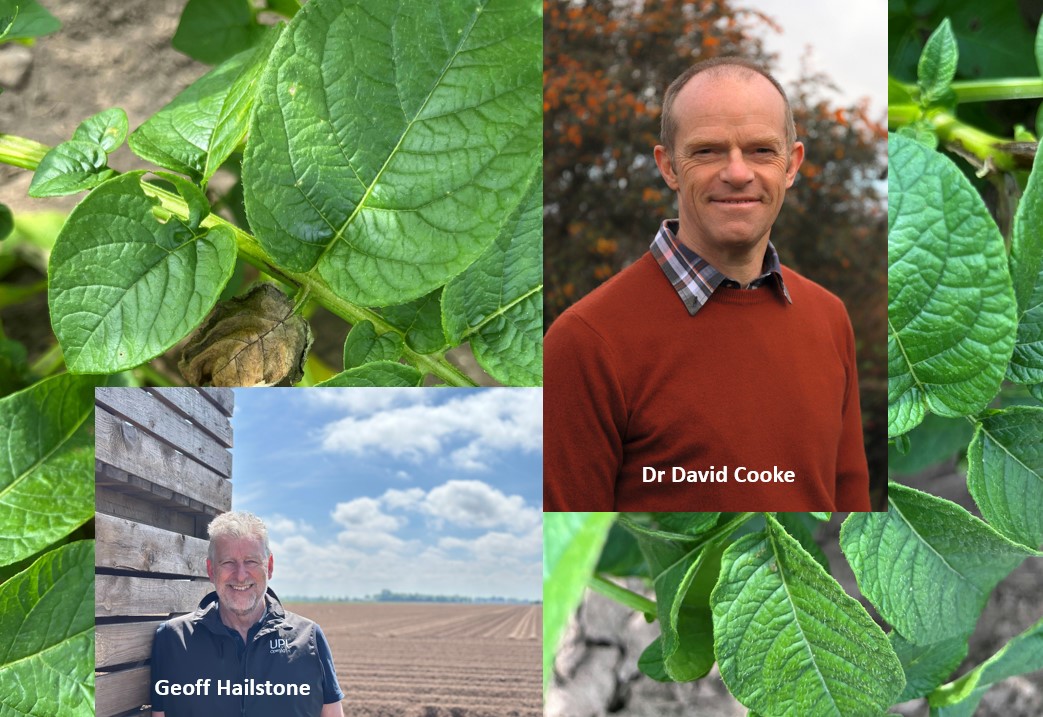
A FIRST UK finding of the potato late blight strain, EU_43_A1, resistant to two crucial groups of blight chemistry, underscores the need to continue following industry guidance on alternating and mixing blight actives and modes of action in programmes.
The strain, which caused significant challenges in controlling blight in several European countries, is resistant to both carboxylic acid amide (CAA) fungicides, including mandipropamid, and oxysterol binding protein inhibitors (OSBPI), such as oxathiapiprolin.
Digital droplet PCR testing of blight-infected volunteer potatoes sampled in Suffolk in November confirmed the presence of the EU43 strain, according to Dr David Cooke of the James Hutton Institute.
The new type of analysis provides the ability to test for the genetic mutations that confer resistance to those two groups, David explains. “It has proved key in detecting EU43, which we wouldn’t have picked up before.”
The late season testing was an addition to the ‘Fight against Blight’ programme, after the low pressure 2025 season meant there hadn’t been any samples from the eastern counties during the season.
“It was unusually warm and damp in October and November, perfect for late blight, which was why we were encouraging volunteer samples,” David said.
He was also keen to discover whether the spread of the other newer blight strain, EU46, had continued from west Wales further into England, after summer testing found it at trial sites in Shropshire and Derbyshire. This strain is also resistant to the OSBPI mode of action found in Zorvec products.
“With more prevailing westerly weather, I was expecting to see further spread, but none of the volunteer samples had EU46. Most of them were EU36, which is what we’d found in the east in the previous year.”
EU36 is the dominant strain in the UK, comprising 41% of samples in 2025. It is aggressive and linked to the breakdown of varietal blight resistance. While it has shown signs of reduced sensitivity to OSBPIs in parts of Europe, testing has shown it remains sensitive to those products in the UK.
That isn’t the case with EU43, although European experience shows it can be controlled. Results from the Euroblight survey show that the incidence of that strain, which caused severe challenges with blight control initially, had reduced in most countries.
By alternating actives, mixing modes of action, and strictly following resistance guidelines, the incidence of EU43 decreased from 23% in 2023 to 12% in 2025, according to the latest EuroBlight data. In Denmark, where the genotype first emerged, the incidence dropped to just 4%.
The exception was France, where there was a sharp increase from 10 to 25%, and could be the source of the infection found near Halesworth by Hutchinson’s Darryl Shailes.
“Anecdotal evidence from France suggests that growers there haven’t been following that advice quite so closely as in other countries,” David points out.
The discovery of the EU43 clone is a reminder of the importance of removing volunteers and potato dumps, says Geoff Hailstone, UPL’s technical potato lead. “It’s very important not to be complacent. There could be more volunteers, despite the widespread use of maleic hydrazide, with the dry season contributing to more small tubers dropping through the harvester webbing and a lack of hard frosts to kill them.
“There’s also a greater volume of poorer quality potatoes that might be dumped, especially on the continent, which could provide inoculum to carry across to the east coast of the UK. So it’s crucial to adopt all the cultural measures and be very vigilant to remove any potential sources of blight that could carry over.”
There shouldn’t need to be any major change in strategy for blight programmes, with virtually all growers using the recommended mixing and alternation tactics advised by experts.
But losing mancozeb will make it a little more difficult, Geoff said. “I think we will likely see more fluazinam used, and maybe more phosphonate products.”
Incidence of EU37, which is resistant to fluazinam, has dropped to just 3%. “You can select for it quickly, if used in the wrong way,” he says. “But it should be fine as long as programmes are designed in the correct way to protect the active. Every time we lose an active it gets that much harder though.”
The other active Geoff forecasts that will be used more this season is propamocarb. Available in a mix with cymoxanil as Proxanil, both actives are the only members of their resistance group. “There’s no cross-resistance with other groups to worry about,” he says.
Proxanil should be used in a tank mix with other products, such as fluazinam mandipropamid or amisulbrom, or at the end of programmes, cyazofamid.
“Proxanil is useful throughout the programme,” Geoff says. “Cymoxanil’s curative activity is useful at the beginning, particularly if any blight infection comes from the seed.
“In the middle of programmes, with the potential resistance issues with oxathiapiprolin, it’s the only reliable anti-sporulant and also helps check mycelial growth, while the mix with cyazofamid is very effective against tuber blight.”
There are concerns about the increased use of propamocarb, particularly regarding the risk of residues in potatoes, but while Geoff advises growers to check with their buyer for restrictions, he points out that the active has a short half-life. “That should mean it doesn’t accumulate in tubers when used according to the label and don’t use two consecutive applications.”