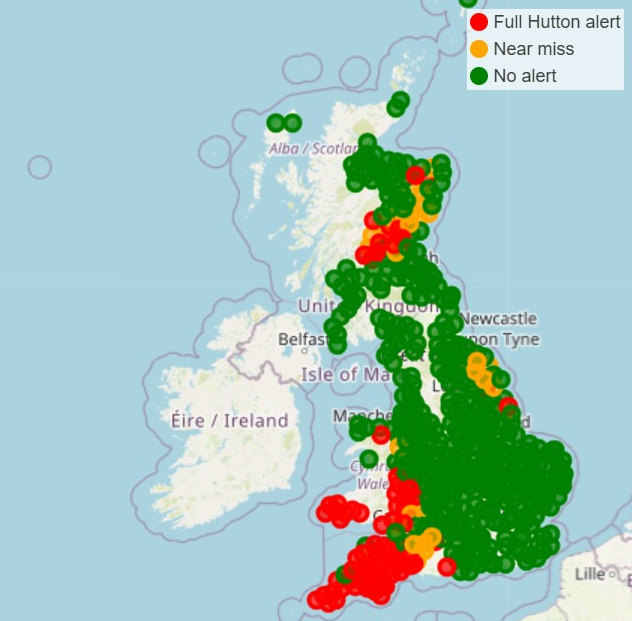

THE 2025 Fight Against Blight (FAB) campaign has begun, with a re-designed web page and data management system to make it easier for growers and agronomists to report late blight.
FAB is sponsored by 19 companies from the potato industry and was first launched in 2006 to provide scientific support to the UK potato industry.
A nationwide network of agronomists, growers and industry representatives act as scouts, submitting up to 1,500 field samples from suspected late blight outbreaks throughout Britain. A team of pathologists at the James Hutton Institute, home to the National Potato Innovation Centre, identify the pathogen and feed back to the scout within a few days. This rapid turnaround allows the industry to tailor its management approaches within the 2025 season to the findings of the project. FAB also provides real-time blight outbreak reporting, a bespoke 7-day forward look at local blight risk and fungicide sensitivity testing on active ingredients prioritised by the industry to tackle blight.
More than 130 people have already registered as Blight Scouts volunteers but anyone still looking to register can do so by visiting the FAB website.
Breeders at the Hutton are working closely with the potato industry to develop varieties resistant to the ever-evolving P. infestans and the fungicides that are used to combat it. Late blight is caused by a fungus-like organism, phytophthora infestans (P. infestans), that spreads rapidly through the foliage and tubers of potatoes in warm, wet weather, causing collapse and decay and can devastate crops within a week.
Plant pathologist Dr David Cooke said: “Scientists at the Hutton are at the forefront of understanding this evolution, documenting and countering cases of fungicide resistance and any weaknesses in cultivar resistance. We report to industry on the implications for integrated pest management (IPM) in support of the UK potato industry, and the newly-released UK Pesticides National Action Plan that puts IPM at the heart of pest and disease management.”
Head of Hutton Scientific Services, Dr Jonathan Snape, added: “Without the essential contributions from a cross-sector group of sponsors, it would simply not be possible to continue the nationwide monitoring of emerging genotypes at a time when it is needed most. As such, we thank them all for their sponsorship and continued support of Fight Against Blight.”
Specific challenges for the season ahead for the UK potato industry are flagged within the European industry. Hutton scientists who, along with European colleagues, are responsible for population tracking in the EuroBlight consortium, have recently reported their findings of the genotyping of nearly 3,000 samples collected across Europe in 2024.
Over recent seasons, this team has identified resistance to two key groups of fungicide active ingredients that are considered key parts of modern late blight fungicide programmes.
Fortunately, the exceptionally dry weather in April and May will have suppressed sources of primary infection of P. infestans. However, Hutton scientists warn that it is critical to maintain fungicide protection and to follow advice from Fungicide Resistance Action Group, manufacturers and agronomists.