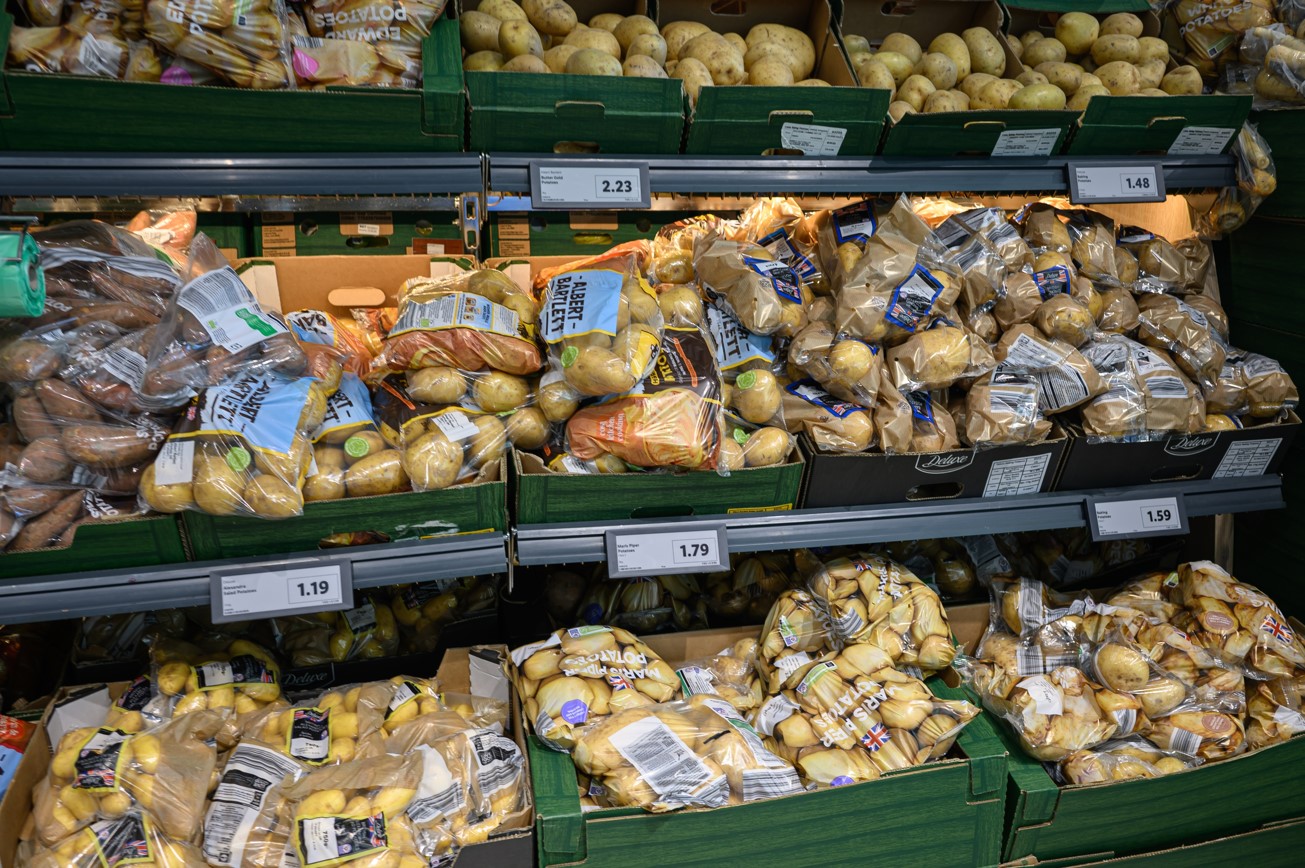
THE British potato market is currently facing challenges, with unsold stock primarily driven by a combination of, at times, severe oversupply from a strong 2025 harvest and what some believe to be a lower demand for table potatoes.
While previous years have seen extreme shortages, the market has reversed to a situation where free-buy prices have dropped significantly.
Last year (2025) UK potato growers suffered as a record EU harvest caused a price collapse, resulting in an oversupply and weakening demand. Despite earlier shortages, many British growers struggled to sell stored potatoes from previous harvests, with some holding hundreds of tonnes and stock from previous, later-stored crops which remained unsold.
Other key Factors that have impacted on the 2025/2026 season have been cited as lower consumer demand, although it’s difficult to corroborate this, as research institutions say demand is increasing, and likely to increase further over the next 10 years.
With many growers holding stocks later into the season, hoping for higher prices, quality has diminished, but with production costs remaining high, it has been financially challenging for those growers to sell at low market rates.
The market moving from a shortage to an oversupply, making it harder for growers to sell non-contracted potatoes, is a direct contrast to the 2023/2024 season, which was defined by shortages owing to extreme, wet weather.
Scott Walker, CEO of GB Potatoes, confirmed there are a number of factors impacting on potato sales and said the industry needs to work together.
“At the moment the market is operating very differently to 2023-4, when tight supply pushed free-buy prices higher, and 2024-5 when a shortage of supply was initially anticipated. With supply currently looser, prices are softer,” he said.
DEFRA Statistics suggest that potato consumption in the UK is still pegged at around 70 kilograms a head per year and remains a staple, despite changing eating habits and the “meat and two veg” diet of the past being replaced by more varied, often processed, or international dietary staples.
Processed products are increasingly making up a larger share of this, as younger British consumers are seeking easier, ready-made options for their meals.
This is a trend seen not just in the UK, but internationally.
At the end of last year, a report by Future Market Insights stated that the global potato processing market size for 2025 to 2035 is projected to reach 72.1 USD billion by 2035, representing a CAGR of 5.6% over the forecast period.
“Analysis of rolling CAGR indicates a consistent upward trajectory, with yearly growth rates ranging between 5.4% and 6.2%, suggesting steady expansion fuelled by rising demand for processed potato products across multiple end-use industries,” researchers stated.
The report went on to add that growing urbanisation, changes in dietary preferences, and the expansion of organised retail networks have strengthened demand for processed potato products globally. Further high growth is expected as technological advancements in processing techniques, sustainable packaging, and cold-chain infrastructure enable manufacturers to reach a wider consumer base efficiently.
The UK is only 63% self-sufficient in potatoes, despite having ideal conditions for growing them. In fact, only 55% of all fresh vegetables consumed in the UK are home-grown. The remainder of the UK’s potato consumption is generally provided from imports from the Netherlands and Belgium.
Scott said: “It is a tough market for UK growers at the moment, particularly for those with potatoes not covered by contracts. Last year was strong for potato production, with UK hectarage believed to be up and EU production reaching its highest level since 2017, compounded by a greater than expected carry-over from the 2024 season.”
He said the market reaction reflects the lack of good data on planted area and yield, something which GBP was keen to address and which had prompted it to recently launch the GB Potatoes Confidence Survey.
“There is significant media interest in potatoes at the moment, and it appears that Christmas saw higher volumes shifted than in previous years. It is important that we galvanise this interest and ensure that potatoes continue to be talked about and enjoyed in all forms, whether fresh or processed.”
Photo: Shutterstock