
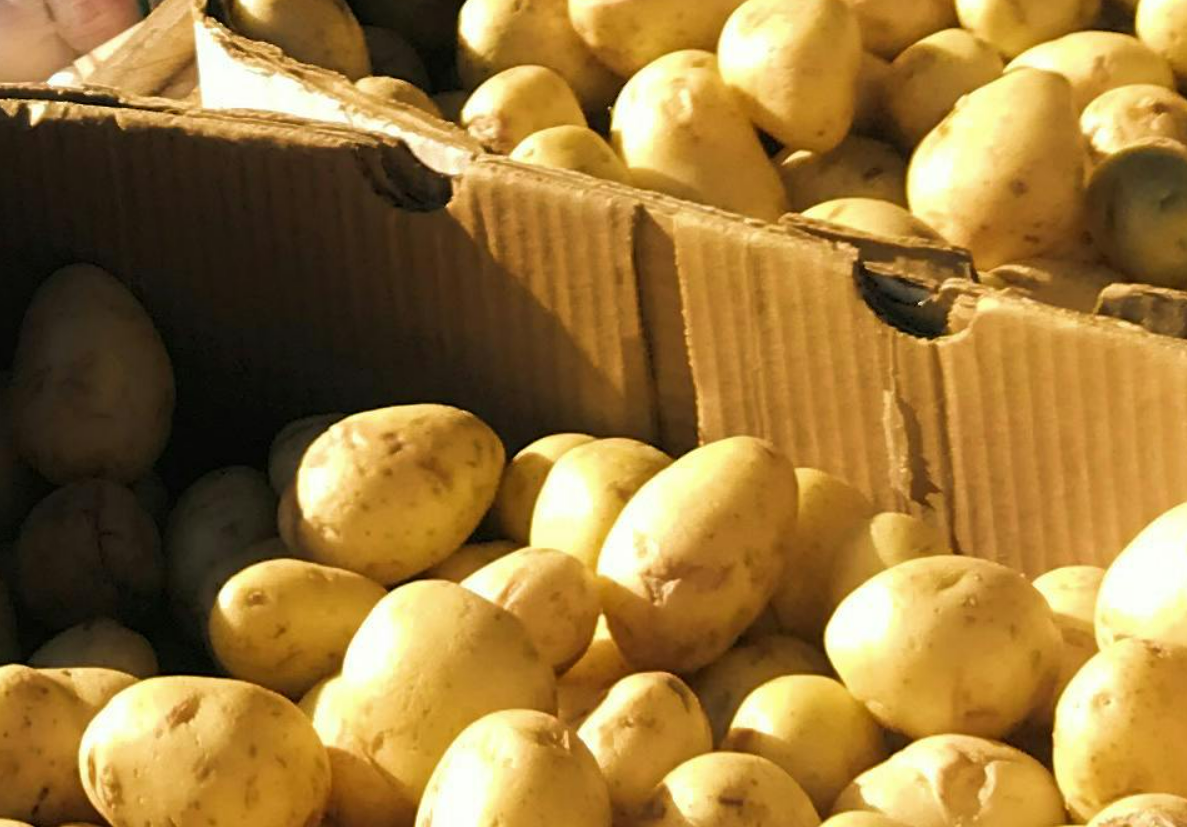
AN artificial intelligence-based forecasting platform is being developed for potato production in Michigan, USA.
The new platform is one of four new research and outreach projects to receive a share of $5.1 million funding from the Agricultural Climate Resiliency Program, a partnership among Michigan State University, the Michigan Plant Coalition, and the Michigan Department of Agriculture and Rural Development (MDARD).
MSU scientists are creating an artificial intelligence-based forecasting platform for potatoes, a major agricultural contributor in the southern portion of Michigan’s Lower Peninsula, alongside corn, soybeans and wheat. The goal is to provide high-quality information to growers and land managers to formulate solutions-oriented strategies to increase resiliency.
The principal investigator is Jiquan Chen, a professor in the Department of Geography, Environment and Spatial Sciences.
The program, which began in 2024 and is administered by MSU AgBioResearch and MSU Extension, was created to address long-term climate and water-related challenges in plant agriculture.
Each project is funded for three years at $1.275 million with research being carried out into efficient use of water, protection of water resources, plant and soil health, and carbon sequestration.
MDARD Director Tim Boring said the initiatives will provide practical solutions to help growers adapt now and in the future.
Director of MSU Extension Quentin Tyler said strong partnerships with agricultural industries and growers are the backbone of its work.
“The outreach component of the Agricultural Climate Resiliency Program is built on these partnerships, and we’re proud to work with growers to help implement research-based recommendations,” he said.
More information on the program is available here.