
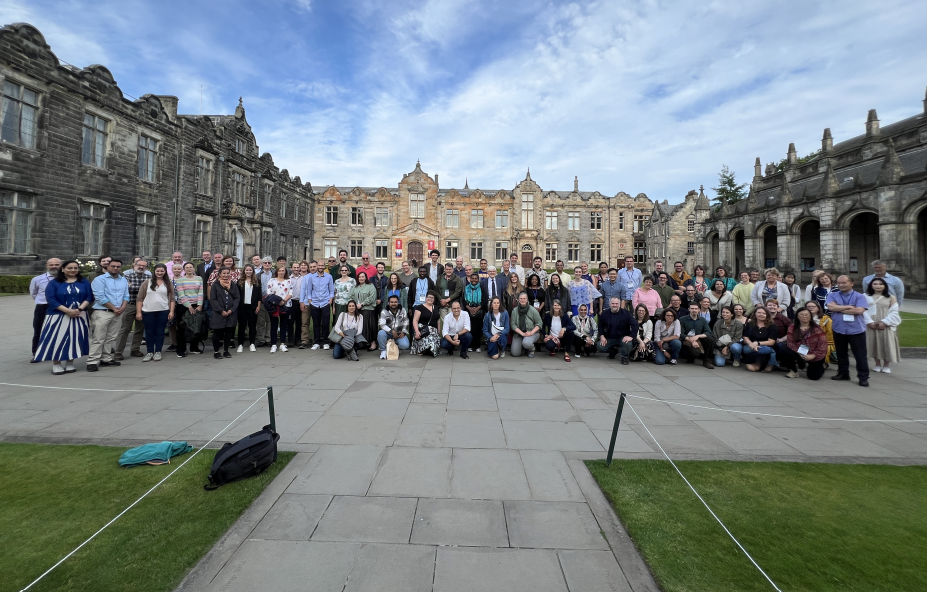
MORE than 100 international participants, representing 53 organisations and industrial partners, spent two-and-a-half days discussing potato breeding in the era of pan genomes and advanced genetics.
The discussion took place at the 20th joint meeting of the European Association for Potato Research (EAPR) and the European Association for Research on Plant Breeding (EUCARPIA), hosted by The James Hutton Institute, in collaboration with the University of Dundee and the University of St Andrews took place in St Andrews.
Data presented and discussed at the meeting demonstrated how genomics and genetics are beginning to shape the accelerated breeding of potato cultivars. The role of AI in evaluating potential new cultivars and their adaptation to various stresses was also highlighted.
Head of Potato Genetics at the Hutton and chair of the local organising committee, Professor Ingo Hein, said: “Potato breeding is especially challenging owing to its complex genome, which makes it difficult to fix beneficial traits. This conference brought together over 100 international experts to explore how genome sequencing (the process of determining the entirety of the DNA sequence of an organism’s genome), AI, natural diversity, and potentially gene editing can drive the faster development of more resilient potato varieties.
“It highlighted the kind of collaborative, cutting-edge science that the Hutton’s National Potato Innovation Centre (NPIC) aims to support and scale in the UK.”
NPIC is one of several crop centres developed by the Hutton. It works in partnership with stakeholders, academics, industry and government in the UK and beyond to carry out scientific research to future proof the potato industry and support economic resilience and growth.
EAPR aims to promote the exchange of scientific and technical information relating to all facets of potato breeding, production, protection, storage and utilisation between various countries, both inside and outside Europe, and to encourage international co-operation.
EUCARPIA aims to foster the development of plant breeding by promoting scientific and technical co-operation throughout Europe. The Association arranges and sponsors meetings of members to discuss general or specific problems.