SOIL health has become one of the potato industry’s hottest topics, with the decline in organic matter often pinned on modern field practices and decades of artificial fertiliser use, particularly nitrogen.
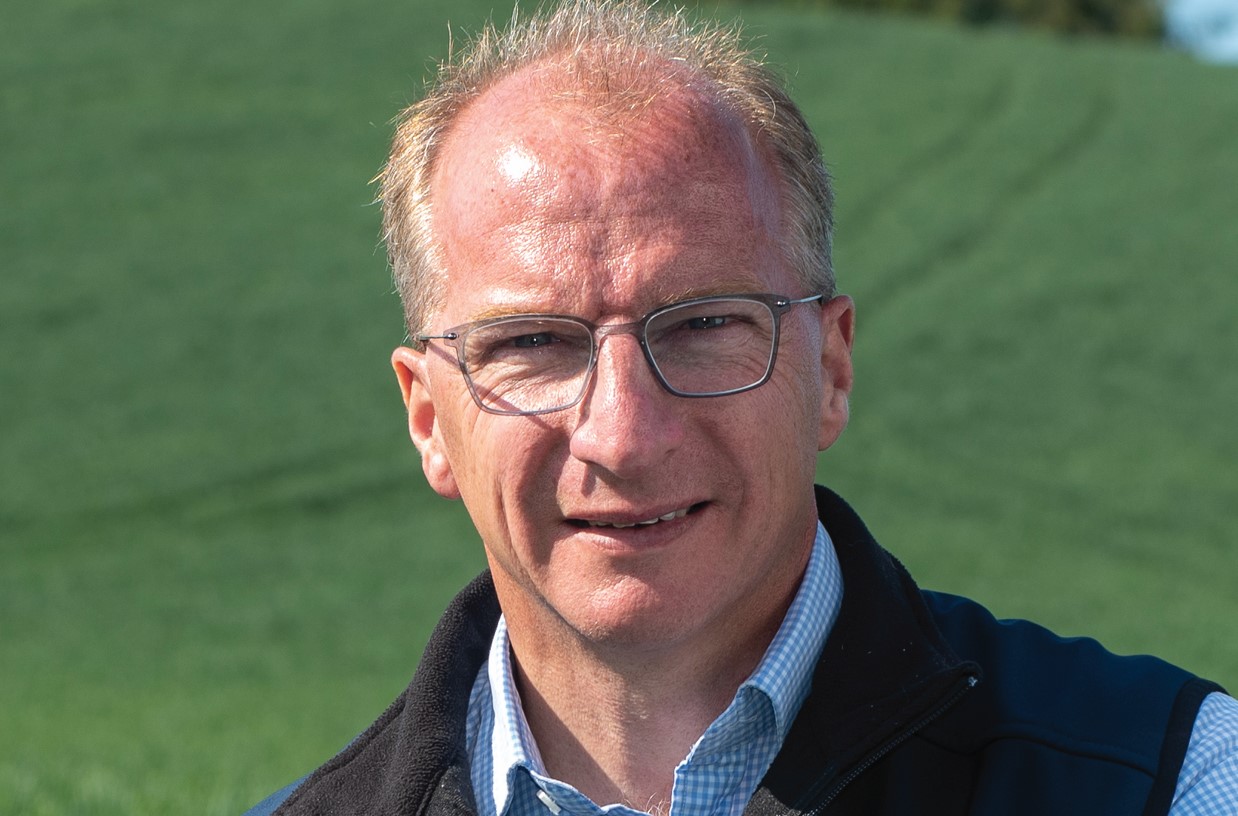
But the reality is more complex, according to Agronomist Mark Tucker, who is also Yara’s Food Chain Business Manager for Europe.
Mark argues that nitrogen use and soil health should be viewed as complementary, not competing.
“First and foremost, let’s think about what soil health and quality actually is,” said Mark. “It has a chemical element in terms of nutrient status, a physical aspect in terms of structure (how it’s made up of sand, silt, clay and organic matter) and a biological fraction, which is very much where the definition of soil health sits
He said that while there may have been over-reliance on fertiliser decades ago, data suggests UK growers have a far more balanced use of fertiliser now, pointing out that use of nitrogen, phosphate and potassium had decreased dramatically over the past 40 years.
Mark believes the issue lies with historic farming systems rather than the nutrients themselves.
“We’re now seeing a systems approach revitalised, which in some ways goes right back to Charles Townshend and the 1730s. That’s really where Regenerative Agriculture started, with everything geared towards soil health and fertility, incorporating cover crops, livestock and wider rotations.”
Rebuilding organic matter is complicated, with manures and compost remaining the most effective route, but supply being limited, or in the wrong place, he said.
While sewage-derived fertilisers (biosolids) are used in UK potato farming, this is under strict timing and safety regulations, with a minimum 10-month harvest interval required between applying treated sludge and harvesting potatoes.
Anaerobic digesters are another option, but targeting use is key, he stressed. “It comes back to understanding your farm at field level,” Mark said. “Soil analysis is the benchmark for working out where organic material will have the greatest impact, whether that’s for NPK fertility or for improving soil structure.”
Where manures, digestate or compost aren’t available, cover crops and green manures offer a way to build organic matter from within the farming system itself, he said.
Mark stressed that quality matters too. “Check the source of any material coming onto the farm. With concerns growing around forever chemicals in sewage-derived products, it’s important to look at certification and analysis, so you know exactly what you’re introducing. Otherwise, you could be building up an unintended legacy issue from what was a genuinely positive plan to improve organic matter.”
Incorporating straw brings its own short-term challenge.
“When you load the soil with fresh organic material, it gets the bugs and soil biology going, and that activity consumes some of the available nitrogen.” said Mark.
On reduced tillage, Mark points to on-farm evidence from the Allerton Project at Loddington, Leicestershire, which is researching the effects of different farming methods on wildlife and the environment. While the project’s primary commercial fields are heavy clay soils used for combinable crops like wheat, barley, and beans, its research team runs dedicated trials specifically designed to adapt potato growing to sustainable and regenerative systems
Although the Allerton Project is shifting to less and less tillage to improve organic matter, it’s had to plough occasionally to get a seedbed and establish a crop and data shows that this occasional ploughing hasn’t been detrimental to the organic matter build-up.
“Some soils tolerate zero-till easily, others are much more challenging, and growers need to stay flexible,” said Mark. “Light soils are genuinely difficult to build organic matter in, while heavier soils offer more opportunity. The direction of travel is towards minimal or zero-till, but the occasional plough, when the season demands it, isn’t going to undo that progress.”
Cover crops require the same field-by-field thinking. “Picking the right cover crop for the soil type and the moment is essential, because establishment isn’t free – it costs time, money and labour,” Mark said. He suggests cover crops are especially valuable after a disappointing yield.
“Here there’s likely to be surplus nitrogen in the field going into a typically wet August. Cover crops mop up that nutrient, reduce the risk of leaching and keep it working within the farm.”
Mark said the two sides of the debate need to work together. “Judicious nitrogen use and organic matter should be seen as complementary elements. Build organic matter through the right practices and you get a more successful, better-established crop with a bigger root system, which in turn improves nitrogen use efficiency.”
He also points to long-standing Rothamsted research showing that fertility built through organic matter is more available to an establishing crop than nutrients locked in the soil’s chemical fraction, and recommended growers develop an integrated soil fertility management plan spanning at least 10 years.
“These aren’t quick fixes. Having that plan in place really focuses the mind on how you manage fertiliser use, soil fertility and organic matter together for the benefit of soil health.”