
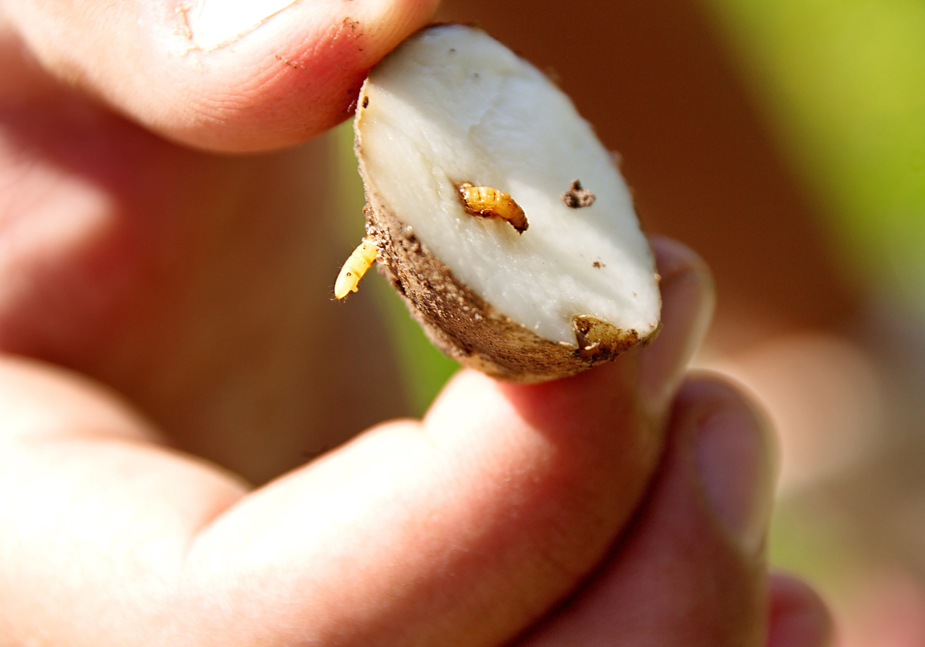
SPECIFIC modelling undertaken as part of Enigma I, a two-year R&D project led by Fera Science and supported by leading industry partners, suggests that wireworm will become more prevalent in northern areas of the UK, and at higher elevations over the next two decades.
Dr Andrew Crowe, Senior Spatial Data Scientist at Fera, said rising soil temperatures, driven by climate change, are creating a more hospitable environment for the pest.
“Following thorough identification processes, including DNA barcoding, we’ve been able to produce maps that show the current geographic ranges of the five wireworm species of most concern to growers across the UK,” he said.
“Building on this, we’ve also modelled the wireworm activity to predict how these geographic ranges are likely to evolve between now and 2040, as soil temperatures rise, owing to climate change. We’ve been able to forecast where the pest could become an issue for farmers in the future, and which species they need to look out for.”
Using life history studies in lab cultures and from field samples, Fera scientists have also investigated the wireworm life cycle and how this alters at different temperatures, which could affect damage patterns.
“These insights have enabled us to model wireworm populations throughout the year, informing on-farm risk assessments, and filling significant gaps in knowledge – as much of our knowledge on wireworm populations comes from just after the Second World War,” said Andrew.
“As a result, we’re providing our partners, such as Syngenta and G’s Growers, with vital, up-to-date information on where and when to target sustainable pest control methods to be most effective at protecting crops.”
The initial Enigma I project will be completed in February 2025, evolving into a second phase of research steered by the priorities of industry partners.
“Incorporating data from the first project, we now plan to build a bespoke risk assessment for each project partner based on crop type, crop rotation, location and other risk factors, alongside a suite of actions and options to reduce wireworm populations,” said Andrew.
“We will also investigate the effects of cover crop mixes funded through the SFI (Sustainable Farming Incentive) scheme on wireworm development, and test a small selection of non-chemical control agents for the pest.”
Organisations interested in being involved in the second phase of this Enigma research project into sustainable wireworm control are being invited to explore partnership opportunities.