
FEATURING the warmest June on record then the wettest-ever August, weather challenges were ever-present for potato growers in 2024.
The political landscape also saw major changes, with a new government coming into power. At the same time, the overall drive to achieve sustainability and environmental targets was ramped up a notch and we’ve seen some notable partnerships being formed within the industry to tackle these.
So how has the industry fared overall this past year, and what is the outlook for 2025?
British Potato Review asked people from different sectors of the British potato industry – Belinda Clarke OBE, Marcus Palmer, Nick Cesare, Luke Murphy, Rob Highfield and Ian Toth – to look into their crystal balls and predict what the coming year has in store for us.
BELINDA: Extreme weather events have become the norm, which impacts everything we do in agriculture. This is especially true for potatoes, where too much or insufficient water dramatically affects profitability. Several large potato growers are Agri-TechE members, and they have used the connections built within the community to help create a more resilient growing system to tackle climate instability.
Outside of the potato crop, climate change is driving a serious look at alternative crops, such as lentils, soybeans, and other cereals. There’s also a strengthening of interest and support for paludiculture, which could compete with potatoes for fenland.
MARCUS: We are told last year (2024) was the warmest on record, but I’m not convinced we saw that in our part of the country. If predictions are right, then it might get warmer, but I think we will see more extremes of wet weather and prolonged dry periods in between.
LUKE: We can only expect more unpredictable weather with the increasing effect of climate change.
NICK: We will see an increase in the acceptance that we need to accelerate many of the environmental plans and schemes that have been discussed and introduced, albeit slowly, in recent years. Over the coming year, we will see an increased investment in carbon capture, solar, and wind power.
ROB: With extreme weather events occurring more frequently over the last 5-10 years such it wouldn’t be a shock to encounter a drought in the summer of 2025 and a wet autumn. Although I hope that this won’t be the case. Growers are increasingly looking to improve their harvesting and handling equipment to manage conditions.
IAN: Both drought and flooding have become commonplace across Europe in recent years and this trend is likely to continue and is likely to become even more pronounced in the future.
BELINDA: Very positive – we have a huge member pipeline, and several major international organisations have confirmed they will join us as members.
MARCUS: Our outlook for the next 12 months is a very positive one, with increasing interest and orders for Algifol as more people are realizing the benefits of biostimulants in modern-day agriculture and horticulture, where inputs are being scrutinized from both cost perspective and also environmental, I also see better prospects for winter cereals next year as establishment is much better than last year at this time going into winter.
LUKE: Speaking to many people in the potato and packaging machinery industry, things are fairly steady in terms of people spending large sums of money on capital projects. However, the service side of GIC’s business and the fact we refurbish our own machinery means we will have plenty of work and another successful year.
NICK: I think 2025 is very difficult to forecast. The government’s recent budget and the increased employer’s national insurance contributions will put pressure on businesses, and I’m not sure how that will pan out. Hopefully, PACE will see potato businesses looking to improve their efficiency through automation.
ROB: We will be continuing with our proactive R&D programme with emphasis on automated box handling, reducing forklift movements and improving crop yield.
IAN: (declined to comment)
BELINDA: Without the science to drive new solutions, I fear for our ability to overcome the challenges posed by pests and diseases and abiotic stress such as weather. This is coupled with the pressure to reduce pesticide use and improve soil health.
I am still trying to figure out the change in the UK’s potato R&D landscape. I sense the pipeline of innovation and adoption is slower for potatoes than 5-10 years ago. Researchers are increasingly relying on BBSRC funding, which is more for supporting the “R” in R&D rather than the more applied “D”, along with some Defra support through the Farming Innovation Programme.
A UK R&D strategy for potatoes is needed, which I know some people are working on, but we also need creative models to fund R&D, leveraging public-private partnerships. I’d like to see this happen in 2025.
MARCUS: I think growing potatoes in 2025 will be challenging if growers decide to grow more acreage and get better yields than in 2024, as planting conditions could be better this spring than last year due to waterlogged soils from the wet winter of 2023. This could have massive impacts on markets because consumption is still falling. I think water supply and climate could also play a part in quality, as we know the weather doesn’t always play along, and if we experience drought conditions through the summer, the yields and quality could suffer. I think technology and prediction models will need to be used more often to try and mitigate these extremes.
LUKE: I can only speak for the machinery manufacturers, but the rising costs of employment, in particular National Insurance, will result in less money within business and, therefore, a lack of growth in the economy and, in particular, a lack of spending on large capital projects. Returning to strong growth within the UK economy is the key to both business and our collective national success.
NICK: I think the key issues in 2025 will be similar to those faced in 2024, namely the unpredictable, often extreme, weather conditions and a lack of people prepared to work in agriculture.
ROB: As a result of the recent budget announced by the new labour government all businesses will feel the effect of the rise in minimum wage and national insurance hike.
IAN: As well as climate, the industry faces a number of other challenges in 2025 including the continued loss of pesticides and need to find alternative methods to protect crops from both the weather and pests and diseases, ongoing regulatory issues (including EU exports and imports), profitability and a lack of new blood into the industry.
BELINDA: Turbulent! With such major geo-political unrest and new governments settling in across the major economies, there is a risk that issues affecting our industry (such as trade deals) take a back seat against other priorities.
On a positive note, we hope that a more enabling regulatory environment will allow new genetic technologies to deliver benefits for the potato industry.
MARCUS: The political outlook is already very different from what we have known, but we expected change, so we will have to adapt and change if we want to survive.
LUKE: A Starmer government has a big mandate for change within the UK and delivered, in their words, ‘a budget for growth’. I have my doubts that taxing businesses to pay for increased public spending will deliver this, but this remains to be seen, and I hope I will be proved wrong. People are very unforgiving of political parties and if the National Insurance changes hamper wage growth, you will see a dwindling of support for the Government. Whether we have sufficient finances as a nation to deliver all that our citizens demand of the state will be the most significant ongoing topic for the entire term of this Government.
NICK: That’s a wait-and-see!
ROB: Since we left the EU there have been ongoing challenges related to trade agreements and tariffs and these issues are likely to persist, however the new government may negotiate new trade agreements.Farmers will likely need to adopt more sustainable farming practices, including reducing carbon footprints and improving soil health. The government may look to incentivise these practices through grants or subsidies.
IAN: Hopefully discussions with the EU will be positive, leading to a more open market.
BELINDA: Maintaining a better work-life balance is always a failed New Year’s Resolution, but one I’m determined to try and stick to in 2025!
I’d also like to reduce the carbon footprint at home and in the business – in 2023, Agri-TechE emitted the equivalent of 170 shipping containers of carbon dioxide, and we need to do better.
MARCUS: Personal goals are to drive our business forward in different ways using technology and diversification to hopefully give us more free time.
LUKE: I don’t set personal ambitions. I am very content and just wish to continue this way.
NICK: I don’t tend to set personal goals, but in terms of business, I want to expand PACE’s market presence, especially when it comes to CoBots. These low-cost, highly efficient, quick-to-install and programme robots have the potential to make a huge difference to potato packers.
ROB: (declined to comment)
IAN: Ensuring that industry, academia and governments work together to make the potato industry a continued success. We hope to do this through the National Potato Innovation Centre.
BELINDA: As someone with absolutely zero interest in any sport, I am pretty ill-placed to comment!
I guess I’d hope for a wider engagement at the grassroots level to teach and inspire teamwork and reduce “screen time “– I don’t care what the sport is as long as participants get fitter and interact as humans with each other!
MARCUS: I don’t really follow sport, but I do enjoy shooting, so I will always try to fit a few more days in with good friends and company away from the business.
LUKE: I would like to see my football team, Leeds United, promoted after coming so close last year. I would also welcome a more level playing field regarding finance in football, particularly at the top end of the Premier League, as I think the whole culture of football in this country developed over 150 years, the passion and the rivalries are in danger of being destroyed as clubs become geo-political playthings.
NICK: I’m a lifelong, die-hard Ipswich Town supporter. I want them to stay in the Premiership.
ROB: I always look forward to the Six Nations and hopefully we see an improvement from England compared to last year’s third place finish. Man Utd are under new management and will finish in the top four this season! You heard it here first.
IAN: (declined to comment)
BELINDA: The rise of Artificial Intelligence. It’s already here – right now, it has the equivalent cognitive capacity of a dog (as compared with a fruit fly just 2 years ago). It will accelerate in its capabilities, and we need to engage now with it to avoid being left behind.
Much more is expected now of plant breeding to solve future challenges, which is why I also expect gene editing to positively affect the industry. There are already examples of blight-resistant potatoes using new breeding technologies at The Sainsbury Laboratory.
Agri-TechE has summarised its member’s thoughts on the future technology to watch out for in our Back to the Future Report, which is available on our website.
MARCUS: I think we will see more technology coming through in precession work and prediction models. As I mentioned earlier, prevention is better than cure, and if we can predict disease earlier or drought predictions, we can save on chemical inputs and build stronger plants to withstand extremes.
LUKE: Artificial Intelligence is already playing more of a role than we might think. I recently hailed a driverless cab in San Fransico, and for certain tasks, chatgpt makes a decent first job of drafting documents that previously took hours. What this means for society moving forward could be profound.
NICK: As well as an increased presence of CoBots, I think we will see more factories using autonomous mobile robots (AMRs). These are intelligent robots that can move around and make decisions independently in dynamic environments. They are already used in logistics, automotive, and consumer goods businesses. I think we will see them introduced to food manufacturing, including the potato industry.
ROB: Reducing labour requirements is always one of the driving factors when investing in technology. Automated warehousing and end-of-line robotic packing are getting increasingly affordable. Optical sorter technology is also continuing to improve. We exhibited again at Interpom in Belgium and after walking around there was evidently more machines on the market.
BELINDA: I am no economist, but I am hoping for a period of relative stability with reasonable forecasts around modest growth and inflation being under control. Financial markets hate uncertainty and volatility, and that impacts everyone.
MARCUS: I don’t claim to be an expert in the economy, but I see retail prices going up as many businesses will pass on extra costs from the increase in wages and National insurance this will have a knock-on effect as people will spend less as a result so we could see a downturn from this
LUKE: The economy will remain flat with low growth.
NICK: Being a glass-half-full type of person, I’m hoping that the increased introduction of automation will help the economy enjoy a year of growth!
ROB: Inflation could still be a concern, particularly if global supply chain disruptions persist or energy prices remain volatile. If inflation remains high then interest rates may remain relatively high, which could have a dampening effect on borrowing, investment, and consumer spending.
IAN: More precision ag around spot spraying is likely to lead to major reductions in chemicals, at least for certain applications. Improvements in marker development will play a major role in the development of new varieties with a range of important traits. The political framework for gene editing plants might shift and provide another tool for generating improved varieties.
THE PANELISTS:
Belinda Clarke OBE, Director, Agri-TechE: Belinda is the founder of Agri-TechE, an independent membership organisation that brings together growers, scientists, innovators and entrepreneurs to create a global innovation hub for agri-tech.
Marcus Palmer, Managing Owner, MJP Supplies: Marcus is a grower with more than 260 acres in South Lincolnshire, and since 2005 he has been the UK distributor of Algifol, a seaweed-based biostimulant which has been proven to enhance potato crops.
Nick Cesare, Managing Director, PACE Mechanical Handling: Nick has been working in agriculture for more than 40 years and, since 1996, has been pioneering robotic and automated packing solutions.
Luke Murphy, Director, GIC: Nick is a joint owner and director at GIC, a manufacturer of vertical form fill and seal packaging machines that are relied upon by some of the UK’s leading potato packers.
Rob Highfield, Sales Manager, Haith Group: Rob has a demonstrated history of working in the mechanical or industrial engineering industry.
Ian Toth, Director, National Potato Innovation Centre: Ian is a science group leader at the James Hutton Institute and Director of the National Potato Innovation Centre. His science focus is on pests and pathogens of potato.







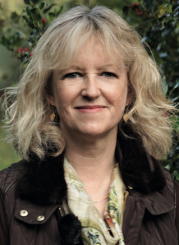
Belinda Clarke OBE, Director, Agri-TechE

Marcus Palmer, Managing Owner, MJP Supplies

Nick Cesare, Managing Director, PACE Mechanical Handling

Luke Murphy, Director, GIC
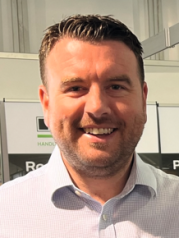
Rob Highfield, Sales Manager, Haith Group

Ian Toth, Director, National Potato Innovation Centre
