
JAPANESE researchers have discovered a slimy, eco-friendly way of repelling Root-Knot Nematodes in potato crops.
Studies by the scientists at Sophia University, Japan, revealed that slime mold secretes organic compounds that repel parasitic nematodes from potato plant roots without harming soil fertility.
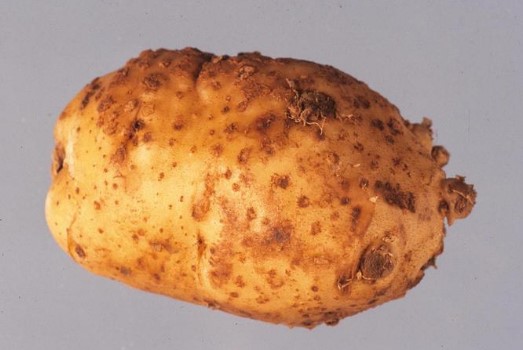
Root-knot nematodes can cause widespread damage to potato crops. The plant-parasitic worms infect potato roots and tubers, causing yield losses and blemishes. Symptoms include small galls on tubers, which appear as pimple-like bumps, and general plant stress like wilting. Management involves crop rotation with non-host plants and the use of nematicides, but effective control requires identifying the specific nematode species present.
Chemical pesticides that control them also severely harm soil fertility.
Soil-dwelling slime mold secretes compounds that repel these nematodes, but their specific nature was unknown. Using novel culturing techniques, researchers have identified 14 compounds of high potency in repelling nematodes, paving the way for the development of non-toxic control methods.
As well as causing the plants to wilt and even die, root-knot nematodes (RKNs), which are of the genus Meloidogyne, kill other microorganisms that are beneficial to potato plants, thereby reducing soil fertility. New, less toxic control methods are needed to prevent the loss of crops and soil fertility to RKNs.
Cellular slime mold (Dictyostelium discoideum) is a soil-dwelling microorganism known for its ability to coordinate the activity of individual cells using chemical signals. Previous studies have shown that D. discoideum secretions can repel RKNs and protect plant roots. Understanding which of the secreted chemicals are most effective at repelling RKNs could lead to the development of new control methods.
The team of researchers led by Professor Tamao Saito from the Faculty of Science and Technology at Sophia University discovered 14 compounds secreted by slime molds that repel RKNs and could be the source of new, non-toxic anti-RKN pesticides. Their research was first made available online in July.
Previous research revealed problems when using cell extracts from slime molds therefore the current study used what Tamao calls a conditioned medium (CM), where slime mold cells are collected from growth medium, suspended in buffered water for three days, then dried and re-dissolved for use as needed.
CM had a very strong repellent effect against RKNs. At a concentration of 30 mg/mL, CM prevented the hatching of 99% of RKN eggs and killed nearly all juvenile RKNs. Even at a 3 mg/mL concentration, 81% of eggs did not hatch, and 71% of the juveniles were killed.
Encouraged by these results, the team then analyzed the chemical composition of the CM. 14 distinct organic compounds were found to repel juvenile RKNs. Of these 14 compounds, four are L-type basic amino acids, five are carboxylic acids, three are antioxidants, along with norepinephrine and pyridoxine. While some compounds were less effective in soil when tested individually, the researchers found that combining them produced a strong synergistic effect. This mixture was far more effective than the compounds alone, showing real potential for use in crop protection.
The team also found that these 14 compounds had synergistic effects. 0.01 mg of the mixture of the 14 compounds was as effective at repelling RKNs as 5 mg of CM, demonstrating the high potency of the mixture. In addition, as these were naturally occurring compounds, they would have very mild effects on soil fertility if used at scale.
“Repellent compounds derived from cellular slime molds can contribute to sustainable food production and improved soil health as part of an integrated pest management approach,” Tamao said.
Tamao plans to direct future research towards understanding the mechanisms of RKN repulsion. “Since synergistic repellent effects were observed when multiple repellent compounds were mixed, these compounds may enhance repellent behavior by utilising multiple different signaling pathways,” she said, adding: “It is important to verify at the genetic level how repellent substances induce repellent responses in RKNs, and this is the next step of our study.”
Photo: Gerald Holmes